Mitovaryn Methylene Blue Safety Center
Methylene Blue Safety and Drug Interactions: What to Check Before Use
Methylene blue is a biologically active drug and a potent reversible monoamine oxidase A inhibitor. Its interaction risk deserves the same seriousness as its possible benefits—especially with antidepressants, certain opioids and dextromethorphan.
Methylene blue can cause serious, sometimes fatal serotonin syndrome when combined with serotonergic medicines, certain opioids or dextromethorphan. Current U.S. labeling also contraindicates systemic use in people with G6PD deficiency and warns about pregnancy, hemolytic anemia, monitoring interference and increased exposure with kidney impairment. The label is for intravenous treatment, so it does not establish a “safe” consumer oral dose. Never stop or pause a prescribed medicine to make room for methylene blue; ask the prescriber or pharmacist to review every medicine and supplement first.
Review the formula after the safety check
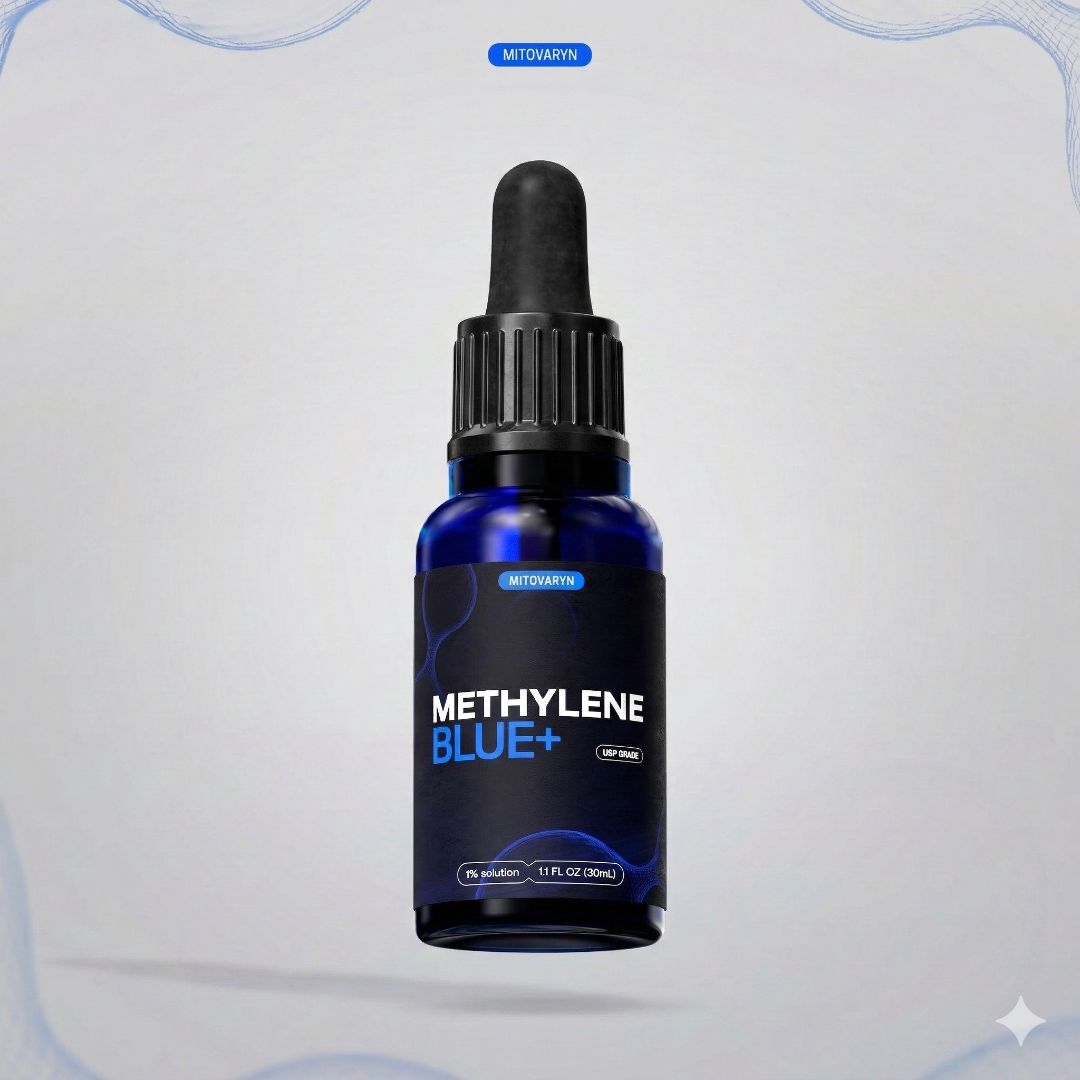
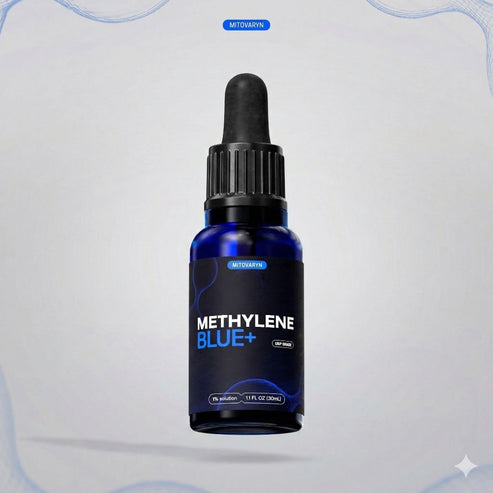
Mitovaryn provides a clearly labeled oral formula and product-specific testing. Those quality controls address the bottle; they cannot remove methylene blue’s drug interactions or make it appropriate for every person.
The safety snapshot
Methylene blue is not just a colored wellness ingredient. It has drug-like activity, reaches multiple tissues and can inhibit monoamine oxidase A, or MAO-A. That mechanism explains why combinations that raise serotonin can become dangerous.
Current U.S. prescribing information concerns intravenous methylene blue for acquired methemoglobinemia.1 It identifies established hazards but cannot promise that an unapproved oral amount is safe.
| Safety issue | What current evidence says | Practical action |
|---|---|---|
| Serotonergic interaction | Serious or fatal serotonin syndrome has occurred, most often with serotonergic medicines; labeling also names certain opioids and dextromethorphan. | Do not self-combine Get a prescriber or pharmacist review first. |
| G6PD deficiency | Current systemic labeling lists it as a contraindication because methylene blue can cause hemolytic anemia and may be ineffective. | Contraindication Do not assume a low dose cancels the risk. |
| Pregnancy | Labeling warns that methylene blue may cause fetal harm. | Avoid casual exposure Speak with the obstetric clinician. |
| Kidney or liver impairment | Kidney impairment increased IV exposure; methylene blue is extensively metabolized by the liver. | Needs clinical review Risk cannot be inferred from a generic chart. |
| Product quality | Lot testing can assess identity, concentration and specified contaminants. | Necessary, not sufficient Testing does not neutralize pharmacologic interactions. |
The key boundary: neither a small number of drops nor a clean certificate of analysis proves that methylene blue is compatible with your medication list.
Why methylene blue interactions can occur
Serotonin is broken down partly by monoamine oxidase A. Laboratory research shows that methylene blue is a potent, reversible inhibitor of MAO-A.2 If another medicine or substance also increases serotonergic signaling, the combined effect can push serotonin activity into a toxic range.
“Reversible” does not mean trivial or instantly gone. Risk depends on exposure, timing, other drugs, metabolism and the clinical situation. The current label reports serious central-nervous-system reactions, including fatal cases, and places a boxed warning on serotonin syndrome.1
Route changes exposure, not the molecule
Oral and intravenous use have different pharmacokinetics, but oral methylene blue still has MAO-A activity. Published labeling does not define a universally safe oral threshold with serotonergic drugs. Study concentrations, milligrams, percentage solutions and drops are not interchangeable; see the dose and concentration guide.
Medicines and substances that require review
This is a screening aid, not an exhaustive interaction checker. Give the clinician or pharmacist every prescription, over-the-counter product, supplement and recreational substance.
| Category | Examples or clues | Why it matters |
|---|---|---|
| SSRIs | Common antidepressants in the selective serotonin reuptake inhibitor class | Explicitly included in the boxed-warning interaction because of serotonin-syndrome risk. |
| SNRIs | Serotonin-norepinephrine reuptake inhibitor antidepressants | Also explicitly included in the boxed warning. |
| Other antidepressant or serotonergic drugs | MAO inhibitors, bupropion, buspirone, clomipramine, mirtazapine and linezolid are named in current labeling. | Different drug classes can still contribute to a serious interaction; class labels alone are not enough. |
| Opioids and pain medicines | The current warning includes opioids as a category; individual agents differ. | Do not assume a prescription or occasional pain medicine is compatible without checking the exact ingredient. |
| Cough and cold products | Dextromethorphan, often abbreviated “DM,” can appear in multi-symptom formulas. | Dextromethorphan is specifically named in the interaction section. |
| Migraine, nausea or neurologic medicines | Some agents can affect serotonin or overlap with concerning symptoms. | Have the exact product checked rather than deciding from the condition it treats. |
| Supplements and recreational substances | Products promoted for mood, sleep, focus or serotonin support may contain pharmacologically active ingredients. | “Natural” and nonprescription do not mean interaction-free; evidence may be limited or the label incomplete. |
If the goal is anxiety or mood support, read the evidence boundaries in methylene blue for anxiety and methylene blue for depression before weighing an interaction risk against an unproven benefit.
How to recognize possible serotonin syndrome
Serotonin syndrome is a potentially life-threatening pattern of mental-status, autonomic and neuromuscular changes. It can worsen quickly. A person does not need to display every feature, and early symptoms can look like anxiety, a viral illness, medication side effects or overheating.
| System | Possible signs named in labeling | Why urgency matters |
|---|---|---|
| Mental status | Agitation, hallucinations, delirium or coma | New confusion or marked behavior change after a possible interaction needs urgent evaluation. |
| Autonomic function | Fast heart rate, rapidly changing blood pressure, dizziness, sweating, flushing or high temperature | Instability and hyperthermia can become dangerous. |
| Muscles and reflexes | Tremor, rigidity, muscle jerks, overactive reflexes or loss of coordination | Neuromuscular findings help distinguish toxicity from ordinary nervousness. |
| Other serious findings | Seizures, nausea, vomiting or diarrhea | Seizure, collapse, severe overheating, trouble breathing or inability to wake is an emergency. |
Act, do not troubleshoot online: if severe symptoms occur after methylene blue or a possible drug combination, contact emergency services or a local poison center now. Bring the product and medication list. Do not take another dose while waiting for advice.
Blue or green urine by itself is a known dye effect and is not the same as serotonin syndrome. The pattern of new neurologic, temperature, cardiovascular and gastrointestinal symptoms is what makes toxicity concerning.
Never stop a medicine to “create” a washout period
A dangerous shortcut is to copy a timeline from an intravenous hospital label and use it as a self-directed antidepressant washout. The label’s timing instructions are designed for medically necessary, monitored IV treatment. They are not a protocol for optional oral wellness use.
Stopping psychiatric, pain or neurologic medication can cause withdrawal, relapse or other harm. Drug persistence varies, so only the treating clinician should plan a change.
| Unsafe shortcut | Why it fails | Better action |
|---|---|---|
| “I will skip my antidepressant for a day.” | A brief pause may not remove the drug, and abrupt interruption may itself be harmful. | Keep taking it as prescribed and ask the prescriber before considering methylene blue. |
| “The label says 72 hours.” | That instruction belongs to a specific IV-treatment context and includes clinical monitoring. | Do not repurpose hospital guidance as a consumer washout schedule. |
| “I used them together once and felt fine.” | A prior uneventful exposure does not prove the next exposure is safe. | Have the complete combination reviewed before further use. |
Non-negotiable: do not stop, taper, delay or replace a prescribed medicine in order to take methylene blue unless the clinician managing that medicine gives an individualized plan.
G6PD deficiency and hypersensitivity
Glucose-6-phosphate dehydrogenase, or G6PD, helps red blood cells handle oxidative stress. Current systemic methylene-blue labeling contraindicates use in people with G6PD deficiency because treatment can cause hemolytic anemia and may fail to work for methemoglobinemia.1
Hemolysis means red blood cells are breaking down. It may be delayed and can be severe. Possible findings include unusual fatigue, weakness, shortness of breath, pallor, jaundice, dark urine, a rapid heartbeat or back/abdominal pain. Those symptoms require prompt medical assessment; the blue color of methylene blue can make visual interpretation of urine especially unreliable.
Severe hypersensitivity to methylene blue or other thiazine dyes is also a labeled contraindication. Hives, facial or throat swelling, wheezing, breathing difficulty, faintness or rapidly progressive symptoms after exposure require emergency care.
Do not guess G6PD status from ancestry or past tolerance. Prevalence differs among populations, but anyone can have the condition. If status matters, a clinician can decide whether testing is appropriate and how to interpret it.
Pregnancy and breastfeeding need clinician guidance
Current prescribing information warns that methylene blue may cause fetal harm. The evidence comes from medical exposure and other clinical experience—not controlled trials of elective oral wellness use. That uncertainty is not reassurance. During pregnancy, potential benefit and risk should be assessed by the obstetric clinician.
The IV label gives breastfeeding precautions for that medical setting.1 Do not copy its interval into a do-it-yourself oral schedule; seek individualized clinical guidance.
Planning pregnancy counts too. Tell the clinician if you are pregnant, trying to conceive or breastfeeding before any exposure. A speculative wellness benefit is not a reason to bypass individualized advice.
Kidney function, liver function and age can change the risk
After an intravenous dose, exposure increased as renal impairment became more severe. Methylene blue is also extensively metabolized in the liver, and labeling calls for added attention to toxicity and interactions in hepatic impairment.1
Those medical instructions do not translate into an oral consumer adjustment formula. They show why a universal drops chart cannot account for clearance, comorbidities or interacting medicines.
| Situation | What may change | What to do |
|---|---|---|
| Kidney disease | Drug exposure can increase; the size of that change depends on impairment and route. | Ask the clinician who knows the kidney function and full medication list. |
| Liver disease | Metabolism, toxicity risk and interaction monitoring may differ. | Do not improvise a lower dose as a substitute for assessment. |
| Older age or frailty | Polypharmacy, falls, organ impairment and sensitivity to confusion or dizziness may be more relevant. | Request a medication reconciliation rather than checking one drug at a time. |
| Child or adolescent | Adult wellness claims and dosing content do not establish pediatric appropriateness. | Use only under direct pediatric medical care for a legitimate indication. |
Expected dye effects, side effects and emergencies
Methylene blue can turn urine or stool blue-green. It can also stain the mouth, skin, fabric and surfaces. Color change is not proof that the product is working, and it should not be used to estimate absorption or dose.
Current prescribing information reports adverse reactions from intravenous trials, case series and class experience. Headache, nausea, diarrhea, dizziness, confusion, visual disturbance, changes in blood pressure or heart rate, muscle symptoms and seizure-like events appear in that body of evidence.1 Those data are important warnings, but their frequencies should not be presented as rates for a retail oral product.
| Observation | Interpretation | Response |
|---|---|---|
| Blue-green urine or stool without illness | Known dye effect; not an efficacy marker. | Monitor, protect surfaces and mention recent methylene blue if testing is performed. |
| New headache, nausea, dizziness or visual change | Could be an adverse effect, an interaction or another problem. | Stop further self-dosing and contact a clinician promptly for advice. |
| Agitation, confusion, fever, sweating, tremor, rigidity or muscle jerks | Possible serotonin toxicity, especially with an interacting substance. | Urgent evaluation Contact emergency services or a poison center. |
| Collapse, seizure, trouble breathing, severe overheating or inability to wake | Medical emergency. | Call emergency services now |
| Jaundice, marked weakness, shortness of breath or unusually dark urine | Possible hemolysis or another serious condition. | Seek urgent medical assessment. |
Methylene blue can interfere with monitoring and laboratory tests
The dye absorbs light and can distort some optical measurements. Pulse oximetry may underestimate oxygen saturation after methylene blue, while urine color can interfere with tests that use blue indicators, including some leukocyte-esterase dipsticks.1
Tell the care team what you took, the concentration, amount, time and other substances. Bring the bottle or label photograph so measurements can be interpreted in context.
Do not ignore breathing trouble because a reading looks “close enough,” and do not panic over a single unexpected reading without clinical interpretation. Symptoms, examination, timing and measurement method all matter.
Dose and product safeguards cannot replace interaction screening
For any liquid, dose is determined by concentration and measured volume—not by the word “drop.” Droppers vary, solutions may use different percentages or milligrams per milliliter, and online protocols may refer to another formulation. Read how to take methylene blue drops orally and the Mitovaryn use guide for product-specific handling without treating them as personal medical clearance.
| Safeguard | What it can establish | What it cannot establish |
|---|---|---|
| Ingredient and concentration label | What the manufacturer states is in a measured volume. | That the amount is appropriate for your health or medication list. |
| Lot-specific certificate of analysis | Results for stated identity, assay or contaminant tests on that lot. | Absence of MAO-A activity, serotonin-syndrome risk or contraindications. |
| Consumer measuring device | A more repeatable volume when used correctly. | A universally safe dose or compatibility with another product. |
| Pharmaceutical or ingestion-appropriate sourcing | A product was made for the stated use and specifications. | That it is approved for a wellness claim or safe for a particular person. |
Never ingest aquarium, textile, laboratory-reagent or industrial dye. Review methylene blue safety and purity, how to read lab tests and Mitovaryn lab results to understand what testing does and does not prove.
A practical pre-use checklist
- Have a prescriber or pharmacist review every medicine and supplement.
- Discuss G6PD status, pregnancy, breastfeeding, organ disease, allergies and prior reactions.
- Verify concentration in mg/mL; do not assume any oral amount is below an interaction threshold.
- Keep the bottle and medication list available in case care is needed.
Frequently asked questions
Can I take methylene blue with an antidepressant?
Do not combine them without explicit guidance from the clinician who manages the antidepressant or a pharmacist with the full medication list. Methylene blue inhibits MAO-A, and serious or fatal serotonin syndrome has occurred with serotonergic drugs.
Which antidepressants interact with methylene blue?
Current labeling highlights SSRIs, SNRIs and MAO inhibitors and also names bupropion, buspirone, clomipramine and mirtazapine. This is not an exhaustive consumer checklist, so the exact drug and all other substances should be professionally reviewed.
Is a low oral dose safe with serotonergic medication?
No universally safe oral threshold has been established for combining methylene blue with serotonergic medication. Route and dose affect exposure, but “low dose” is not proof of compatibility. Ask the prescribing clinician rather than testing the combination yourself.
Can I stop my medication temporarily to use methylene blue?
Not on your own. Abruptly stopping a medicine can cause withdrawal, relapse or other harm, and some drugs remain active for a long time. Hospital-label timing for necessary IV treatment is not a do-it-yourself oral washout schedule.
Does methylene blue interact with cough medicine?
It can. Dextromethorphan is specifically named in current methylene-blue interaction labeling and is common in products marked “DM” or sold for multiple cold symptoms. Check every active ingredient with a pharmacist before use.
Does methylene blue interact with opioids or pain medicines?
Current labeling warns about concomitant use with opioids because of serotonin-syndrome risk. Individual pain medicines differ, and combination products may contain multiple ingredients. Have the exact prescription or package checked rather than relying on the category name.
Can someone with G6PD deficiency use methylene blue?
Current systemic labeling lists G6PD deficiency as a contraindication because methylene blue can cause hemolytic anemia and may not work as intended for methemoglobinemia. Do not assume a small oral amount removes that concern.
Is methylene blue safe during pregnancy or breastfeeding?
Labeling warns that methylene blue may cause fetal harm and gives breastfeeding precautions for IV treatment. Those instructions are not an oral wellness protocol. Pregnant, pregnancy-planning or breastfeeding people should seek individualized clinical guidance before exposure.
What if I have kidney or liver disease?
Kidney impairment can increase exposure, and methylene blue is extensively metabolized by the liver. Oral consumer dosing has not been validated across these conditions. A clinician should assess organ function, the reason for use and the complete medication list.
Is blue or green urine normal?
Blue-green urine or stool can occur because methylene blue is a dye. It is not proof of benefit or a dose gauge. Tell healthcare professionals about recent use because the color can interfere with some urine tests.
Can supplements interact with methylene blue?
Potentially. Some supplements marketed for mood, sleep or focus may affect serotonin or contain incompletely characterized ingredients. “Natural” does not guarantee compatibility. Include supplements, powders, gummies and recreational substances in the pharmacist’s review.
When should I seek emergency help?
Seek emergency help for collapse, seizure, trouble breathing, inability to wake, severe overheating, marked confusion, rigidity or rapidly worsening symptoms. Possible serotonin toxicity after a drug combination needs urgent evaluation; bring the bottle and medication list.
Sources and review notes
- U.S. National Library of Medicine. Methylene Blue Injection prescribing information. DailyMed; updated April 2026. Boxed warning, contraindications, interactions, special populations and monitoring interference.
- Ramsay RR, et al. Methylene blue and serotonin toxicity: inhibition of monoamine oxidase A confirms a theoretical prediction. Br J Pharmacol. 2007.
Review method: this guide prioritizes current U.S. prescribing information and primary pharmacology. The label concerns monitored intravenous treatment of acquired methemoglobinemia; it informs known hazards but does not validate a consumer oral interaction threshold. Medication examples are screening prompts, not a complete database or individual clearance.
Choose transparency after appropriateness
Mitovaryn provides a clearly labeled oral methylene-blue formula and product-specific testing information. Review concentration and testing only after a qualified professional has checked your medicines, supplements and medical risks. A verified product remains pharmacologically active.